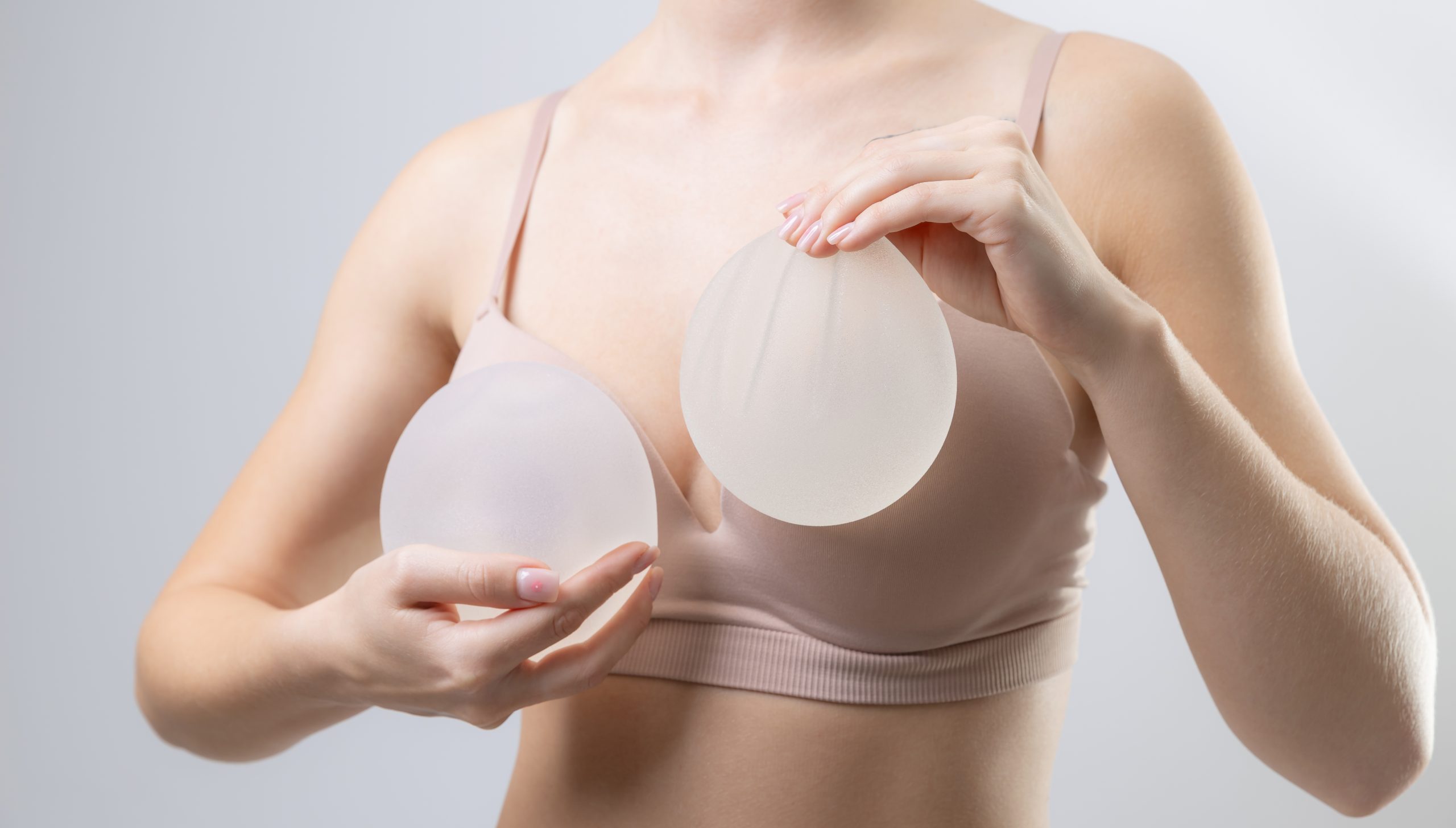
While high-volume implants are possible for many women, the size you can safely and attractively achieve depends primarily on your unique anatomy – chest width, breast tissue thickness, skin elasticity, and existing breast position – rather than a specific implant size.
A larger implant is not simply a bigger version of a smaller one. It changes how the implant sits, how your skin stretches over time, and how much surgical planning your result requires.
At Blinski Plastic Surgery, planning is built around surgical precision rather than a single “trending” size. Dr. Darryl Blinski’s extensive experience and board certification form the foundation of every plan, and consultations are available in person or virtually.
Breast augmentation increases breast volume and improves breast shape using implants, fat transfer, or a combination of both. Implants are placed behind the breast tissue or under the chest muscle. Women pursue it for many reasons:
Naturally small breasts or a desire for a fuller, more prominent bustline
Volume loss after pregnancy, breastfeeding, or weight loss
Asymmetry between the two sides
A more balanced, proportionate silhouette that fits their frame
It’s equally important to know what augmentation does not do. Implants add volume and some upper-pole fullness, but they do not meaningfully lift breasts with significant sagging. When the nipple sits low, or the skin envelope is loose, volume alone can make the breast look heavier and lower rather than perkier.
Patients needing volume and repositioning are often better served by breast augmentation with lift
Patients who only need repositioning may need a breast lift alone
This distinction matters even more with large implants. Extra weight accelerates the natural downward pull on breast tissue – if your skin is already stretched, a very large implant may create the exact droop you hoped to correct.
There are two broad categories of implants, plus a non-implant option worth knowing about.
Saline implants are filled with sterile salt water inside a silicone shell. They’re inserted empty and filled during surgery, which allows a slightly smaller incision and lets the surgeon fine-tune volume. If a saline implant ruptures, the deflation is obvious and the fluid is safely absorbed. Saline tends to feel slightly firmer and, in thinner patients, can show more rippling along the edges – more noticeable at higher volumes.
Silicone gel implants are pre-filled with a cohesive silicone gel that closely mimics natural breast tissue. Most patients pursuing larger sizes prefer silicone, because the gel drapes more naturally and is less prone to visible rippling under thin tissue. Highly cohesive “form-stable” gel implants hold their shape even more firmly. Because silicone rupture can be silent, imaging surveillance is recommended over the life of the implant.
Fat transfer is a third path. This procedure uses liposuction to harvest your own fat, which is purified and injected into the breasts. Alone it produces a modest, natural increase – usually not enough for dramatic size – but it pairs beautifully with implants to soften edges, camouflage implant borders, and improve cleavage contour.
Generally, good candidates are:
In good overall health, with any chronic conditions well controlled
At a stable weight, since significant changes alter breast appearance
Non-smokers, or willing to stop well before and after surgery, since nicotine impairs healing
Finished with pregnancy and breastfeeding, or willing to accept that future pregnancy may change results
Realistic about what surgery can and cannot deliver
For large implants specifically, Dr. Blinski assesses additional factors:
Body frame: A wider or taller frame accommodates a larger implant more proportionally than a petite or narrow one.
Existing breast tissue: Adequate natural tissue covers the implant, producing a more natural result and reducing visible edges or rippling.
Skin elasticity: Skin must stretch to accommodate new volume without becoming overly thin or strained.
Lifestyle: Very large implants can interfere with athletic activity or require more supportive garments.
Women with narrow chests, very thin tissue, or already-stretched skin can still achieve fullness, but the ceiling is lower – pushing past it tends to produce visible implant edges, widely spaced breasts, or early drooping. There is no substitute for measurement.
Before committing to a large size, think through the practical realities:
Your lifestyle. Runners, tennis players, dancers, and anyone doing high-impact exercise often find very large implants physically limiting.
Your wardrobe and profession. Larger implants change how clothing fits across the chest and shoulders.
Your back and shoulders. Extra breast weight is carried by the neck, shoulders, and upper back. Discuss existing discomfort honestly.
Gravity and skin stretch. Skin does not return to its previous state. The larger the implant, the more the envelope stretches – and the more likely a lift will be needed later.
Future revision. Very large implants make future surgery more complex; heavily stretched tissue has fewer options when it’s time to downsize or replace. Blinski Plastic Surgery has extensive experience with breast augmentation revision, serving patients unhappy with results from previous surgeries elsewhere.
Your reasons. Choose a size because you want it – not because of a trend, a partner’s preference, or an image you saw online.
Here’s the part most patients don’t hear often enough: implant volume is a result of good planning, not the starting point of it.
When volume is chosen first, and the anatomy is forced to accommodate it, predictable problems follow – implants that sit too close together or too far apart, visible or palpable edges, upper-pole rippling, “bottoming out” where the implant descends below the breast crease, and accelerated sagging.
Surgical precision is critical at high volumes. The pocket must be sized and positioned perfectly: too large and the implant shifts or rotates; too small and it looks distorted or feels firm. Higher-profile implants deliver more projection within the same base width, letting a woman with a narrow chest achieve real fullness without spilling toward her armpits. Adding fat transfer around the implant borders further softens transitions.
This is the heart of our “fix it right the first time” philosophy: match the implant to the body, then maximize within that framework.
Implants are medical devices that require ongoing awareness. Plan on it from day one.
Follow-up visits in the weeks and months after surgery confirm healing is on track and implants are settling as expected.
Imaging surveillance for silicone implants, per current FDA guidance, checks for silent rupture. Calendar the reminders.
Self-awareness. Note any change in shape, firmness, symmetry, or sensation and mention it promptly.
Routine breast health screening continues normally – tell your mammography technician you have implants so appropriate technique is used.
Recordkeeping. Keep your implant device cards somewhere you’ll find them years later.
There is no fixed replacement schedule and no universal expiration date. The common “every 10–15 years” guideline is not always true – many women keep the same implants for well over a decade without issue.
Replacement or revision is typically driven by a specific reason:
Implant rupture or deflation – uncommon with modern implants, but possible.
Aesthetic choice – a desire to change size or shape, or to address natural changes from aging or pregnancy that make the original result no longer flattering.
Larger implants tend to shorten the interval, simply because greater weight produces more tissue stretch over time. Factor that in – not as a deterrent, but as realistic planning.
Breast augmentation is one of the most-studied and most-performed cosmetic procedures in the world, and modern implants are regulated medical devices with decades of clinical data behind them. Safety, however, is not a property of the implant alone – it depends on the surgeon’s training, the surgical facility, patient selection, and adherence to post-operative and long-term monitoring guidance.
Our practice uses only high-quality, FDA-approved implants in a medical-grade facility, and emphasizes safety-first care over volume-driven decisions. Choosing a surgeon who will tell you when a requested size doesn’t suit your anatomy is part of what makes the procedure safe.
The FDA continuously monitors breast implant safety and has strengthened patient-information requirements in recent years. Key points every prospective patient should know:
All breast implants sold in the U.S. carry a boxed warning and come with a patient decision checklist you review and sign with your surgeon before surgery.
Implants are not lifetime devices. The FDA is explicit about this. Revision or replacement may be needed at some point.
Device cards are provided after surgery, listing manufacturer, style, size, and serial numbers. Keep these with your medical records.
Imaging surveillance is recommended for silicone gel implants – MRI or ultrasound beginning several years after placement, then periodically, to check for silent rupture.
Manufacturers maintain ongoing safety studies, and implant labeling is updated as new data emerges.
Miami is a hub for plastic surgery, but not all providers are equal – especially for complex, large-volume augmentation. The surgeon you choose matters more than the implant you choose.
Verify credentials directly. Look for certification by the American Board of Plastic Surgery (ABPS) – the gold standard, indicating extensive training in plastic and reconstructive surgery. Dr. Blinski is a board-certified plastic surgeon. Confirm surgery will take place in an accredited facility.
Look for high-volume experience specifically. Ask how often the surgeon performs high-volume augmentation and how they approach narrow frames or thin tissue.
Expect measurement, not guesswork. A consultation without chest measurement and skin quality assessment isn’t a real surgical plan.
Value honesty over agreement. A surgeon willing to tell you 800cc won’t look good on your frame – and explain why – is more valuable than one who says yes to everything.
Review real patient results and feedback. See the gallery and read patient testimonials to understand the aesthetic the surgeon consistently produces.
Confirm consultation logistics. In-person and virtual consultations are both available, and a consultation with the doctor is required to determine whether a procedure is appropriate.
Our Miami office is located at 3661 South Miami Avenue, Suite 509. Learn more about Dr. Blinski and explore the full range of breast procedures offered.
Large implants are achievable for many women, but the right size comes from your measurements, tissue quality, and lifestyle – not from a number picked in advance. Plan for monitoring and possible future revision, since implants aren’t lifetime devices, and understand that greater volume generally means more tissue stretch over time. Above all, choose a board-certified plastic surgeon who measures carefully and tells you the truth about what will suit your body.

About the Author
darryl J, blinski md