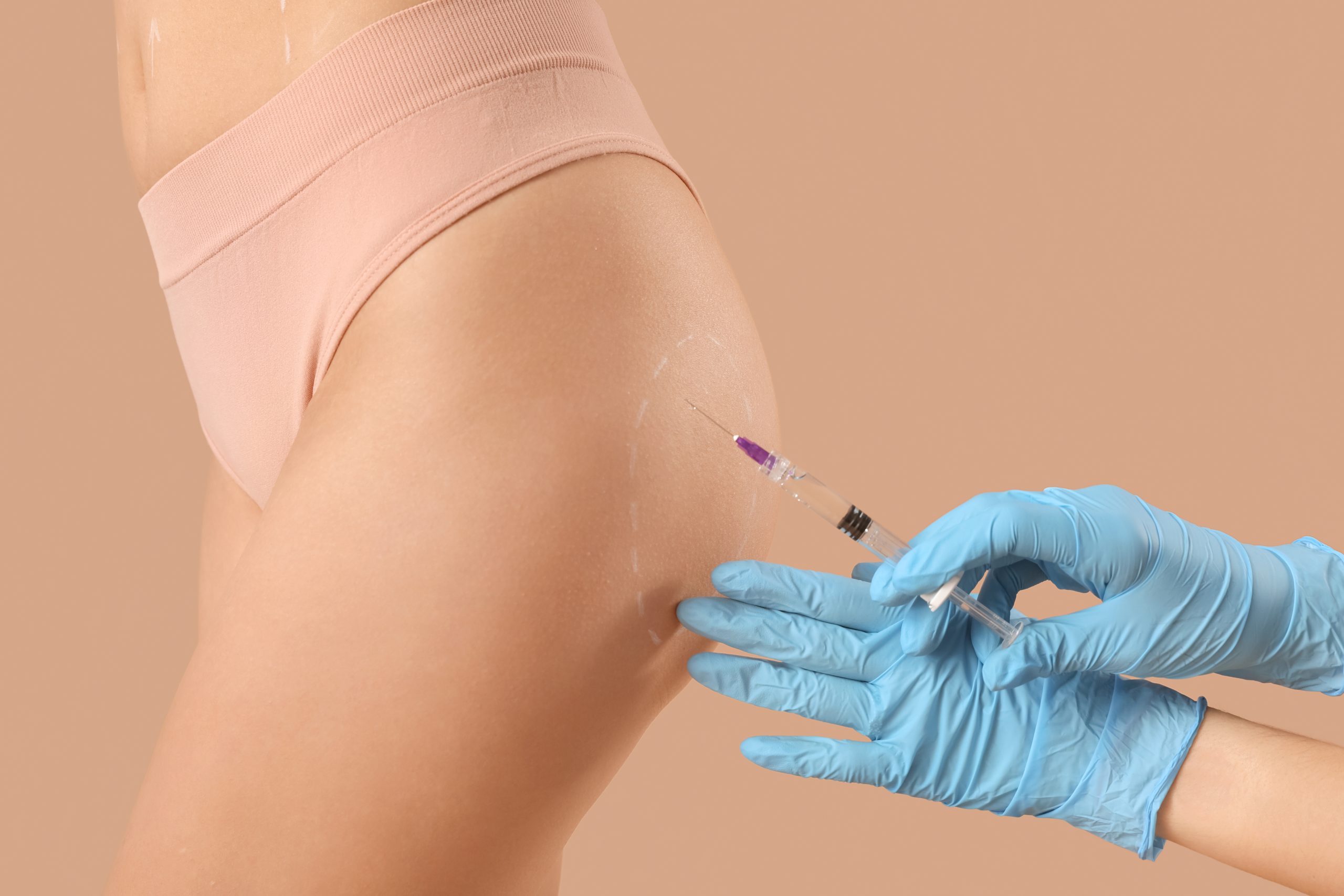
Removing silicone injections from the buttocks requires surgical intervention by an experienced surgeon who can safely extract the foreign material through specialized techniques. Because liquid silicone migrates and integrates with tissue, removal requires a combination of direct excision, advanced liposuction, and often a buttock lift.
Our board-certified plastic surgeon, Dr. Darryl J. Blinski, specializes in these complex revision surgeries, offering comprehensive removal options tailored to each patient’s situation while prioritizing safety and restoring health.
Illegal buttock injections involve substances that are typically not medical-grade – often industrial silicone, sealants, mineral oil, or other materials never intended for human use. These biopolymers (large-molecule substances) trigger severe inflammatory responses in the body. Unlike FDA-approved dermal fillers, these materials are permanent, unpredictable, and can be toxic.
People seek these injections from unlicensed practitioners in non-medical settings like hotels or private homes. The appeal includes:
Promise of dramatic results at a fraction of legal procedure costs
Quick alternative to the surgical Brazilian butt lift
While often called “silicone injections,” the materials vary:
Liquid Silicone: Industrial or medical-grade silicone oil that integrates with tissue, making complete removal impossible
Hydrogel: A water-based polymer that causes severe inflammation and infection
PMMA (Polymethyl-methacrylate): Microscopic plastic beads forming hard nodules; used illegally in massive quantities in the buttocks
Biopolymers: Catch-all term for synthetic materials, including petroleum products, vegetable oils, or unknown industrial mixtures
The process typically involves a combination of surgical techniques designed to extract as much foreign material as possible while preserving healthy tissue and restoring natural contours.
For free-floating silicone without extensive hardening, specialized liposuction can extract material. VASER ultrasound technology breaks up less-hardened scar tissue and emulsifies silicone for suction removal.
This minimally invasive approach works for:
Recent injections with relatively fluid silicone
First-stage procedures in multi-step treatment
Cases without extensive scar tissue formation
Most cases require direct excision through a buttock lift approach. This allows:
Direct access to remove hardened silicone masses and scar tissue
Removal of damaged, discolored, or ulcerated skin
Simultaneous addressing of skin laxity and contour deformities
Most effective bulk removal of problematic tissue
After removal, restoration options may include:
Fat transfer using the patient’s own tissue
Additional lifting and contouring procedures
Dr. Blinski recommends waiting 6-12 months after removal before undergoing enhancement procedures.
Preparation for surgery typically requires:
Physical examination or detailed photo/video review
MRI or ultrasound imaging to determine the extent of silicone
Review of previous treatments or surgeries
Discussion of realistic expectations
Pre-operative testing, including blood work
Creation of a precise, individualized surgical plan
The surgery day includes:
Check-in and pre-operative preparation
General anesthesia administration
Systematic foreign material removal
Careful preservation of the blood supply and nerve function
Drain placement for excess fluid removal
Transfer to recovery for monitoring
Recovery requires commitment and careful adherence to instructions:
Immediate Recovery (Days 1-7)
Rest with restricted activity
No sitting directly on the buttocks
Pain management with prescribed medications
24/7 compression garment wear
Drain care and monitoring
Early Recovery (Weeks 2-4)
Gradual light activity increase
Follow-up appointments for wound checks
Drain removal when output decreases
Modified sitting with special cushions
Continued compression garment use
Extended Recovery (Months 1-6)
Progressive return to normal activities
Scar management protocols
Regular follow-up appointments
Assessment for additional procedures
Complete healing and final results take 6-12 months
This complex procedure demands a board-certified plastic surgeon. Certification by the American Board of Plastic Surgery ensures extensive training in all aspects of plastic and reconstructive surgery, including complex revisions. Dr. Blinski’s board certification reflects a commitment to the highest safety standards and surgical precision.
If you’re wondering, “How to remove silicone injections from the buttocks?” the answer lies in carefully planned, multi-stage surgical approaches by experienced specialists. For those seeking information on how to remove silicone injections from the buttocks, comprehensive evaluation and personalized treatment plans are essential for restoring health and appearance.

About the Author
darryl J, blinski md